
The Ultimate Guide to Retraining Your Nervous System for Safety and Calm
Do you feel constantly on edge? Like your internal “car alarm” is perpetually armed, ready to blare at the slightest provocation?
Living with the residue of trauma or chronic anxiety can feel exactly like this. It’s as if your nervous system is an overly sensitive security system that goes off if anything gets too close.
This state of hypervigilance is exhausting. It dominates your day with stress, fear, and tension, leaving you feeling triggered, jumpy, and eventually, completely burnt out. You’re stuck in what’s known as a “sympathetically dominant” state—your body’s permanent fight-or-flight mode. You’ve tried to “just calm down” or “not feel stressed,” but it never sticks.
Here’s the deal: You are not broken. Your nervous system can be retrained.
It is possible to intentionally shift from that constant state of activation to one of safety, balance, and confidence. This is the “parasympathetic” state, often called “rest and digest.”
This article is your strategic guide. We will unpack nine simple, actionable micro habits you can weave into your day, starting today, to retrain your nervous system for lasting calm.
Read on to discover the first step to reclaiming your peace.
A quick note for your well-being (YMYL Disclaimer): The information in this article is for educational purposes only. It is not intended as a substitute for professional medical advice, diagnosis, or treatment. Always seek the advice of your physician or another qualified health provider with any questions you may have regarding a medical condition.
What Is a Dysregulated Nervous System?
Before we get to the habits, let’s establish a clear picture of what’s happening inside your body. Think of your nervous system as having two primary modes.
1. The Sympathetic State (The “Gas Pedal”)
This is your activated state. It’s designed for brief spells when you need to face a threat or a challenge. It releases cortisol and adrenaline, making you alert, anxious, and ready to move.
For those with trauma or chronic anxiety, the system becomes “stuck” in this mode. It becomes sympathetically dominant. This chronic activation is what leads to those negative impacts on your mental and physical health.
2. The Parasympathetic State (The “Brake Pedal”)
This is your calming state. It’s where you feel safe, balanced, confident, and socially connected. When your parasympathetic system is dominant, your “car alarm” doesn’t get triggered as often. And when it does, you can return to a sense of safety much more quickly.
The goal is not to eliminate your stress response, but to make it more flexible and resilient. We want to spend more time in the parasympathetic state.
These nine habits are designed to do exactly that.
9 Actionable Micro Habits to Regulate Your Nervous System
1. Be Proactive: Set an Actionable Intention
The trauma-based behavior is reactivity. It sounds like: “I don’t want to feel stressed today” or “I don’t want to get triggered.”
The regulating habit is proactivity.
In our clinical experience, a common mistake we observe is trying to fight a feeling. The harder you try to “not feel stressed,” the more stressed you will feel. Being anti-reactive is just another form of reactivity.
Instead, you must choose what you want instead.
- Instead of: “I don’t want to be so reactive.”
- Try: “I will be kind to myself today.”
- Instead of: “I hope I don’t get overwhelmed.”
- Try: “I will notice when I feel overwhelmed, and then I will pause.”
Choose something simple, active, and empowering. Spend one minute at the beginning of your day writing this down or visualizing it. This gives you forward momentum and puts you back in control.
2. Move Deliberately. Slow. Down.
When you’re dysregulated, you’ll feel rushed, hurried, and scattered. You’ll move with frantic, tight, jerky movements when you walk, eat, or check emails.
This sends a powerful message to your brain: “We must be in danger.”
A simple, profound way to calm your nervous system is to intentionally slow down. Move deliberately.
- The Trauma Behavior: Rushing and frantic hurrying.
- The Regulating Habit: Slow down and settle.
You can build this into your day with “pause routines” at transition points.
- Before you join a meeting, pause and take three slow breaths.
- Before you eat, pause and simply look at your food for a moment.
- Train yourself to walk more slowly and eat more slowly.
Going slowly sends an equally powerful message: “We are safe.”
3. Master Your Morning to Set the Tone
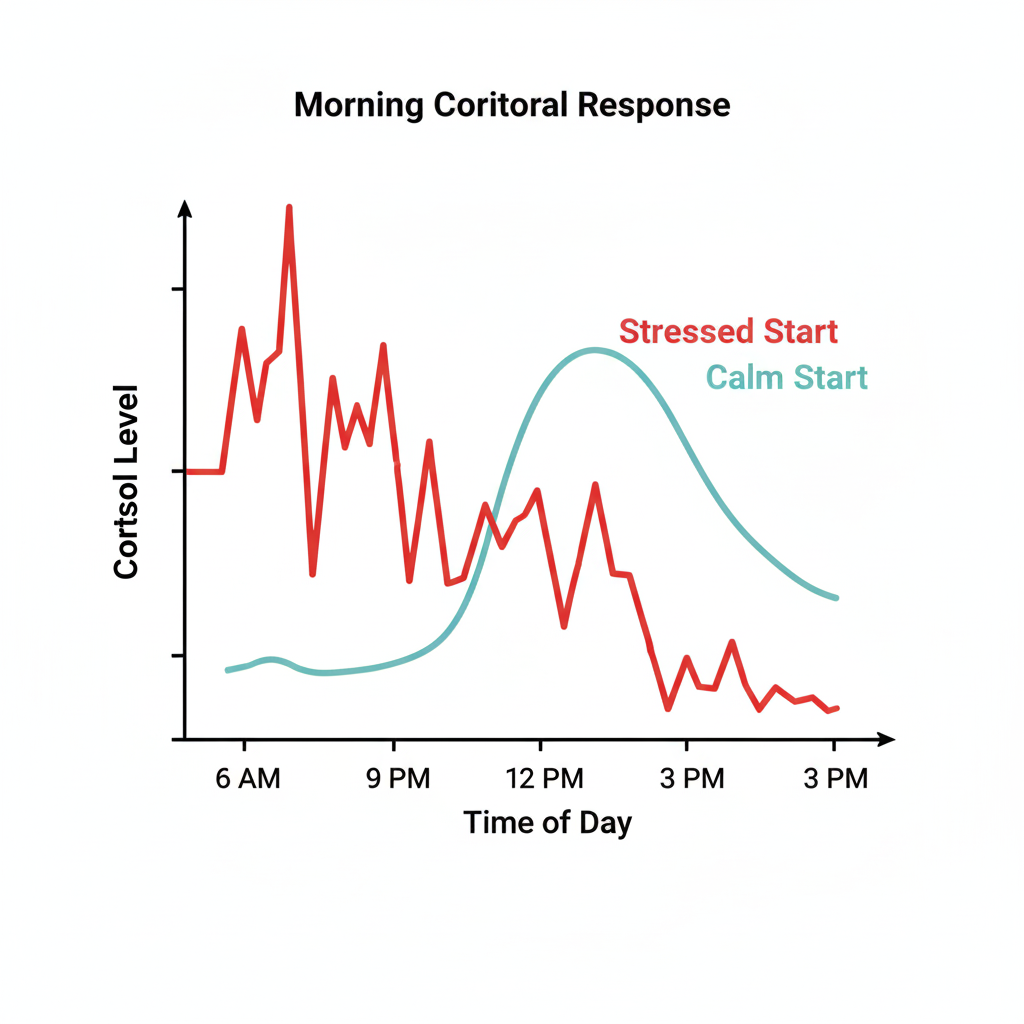
How we start our day sets the tone for everything that follows. Many people experience higher cortisol (the stress hormone) levels in the morning.
If you start your day with:
- A blaring, aggressive alarm clock
- Laying in bed worrying about the day
- Immediately checking the news or social media
…you are priming your nervous system for danger. You’ll be jittery and tense before your feet even hit the floor.
- The Trauma Behavior: Starting the day stressed.
- The Regulating Habit: Giving yourself enough time and space.
Try a gentle start. This could look like waking up to gentle music, reading something inspirational (not the news), or listening to a 5-minute meditation. Gentle exercise or a lower-carb breakfast can also help keep you off the roller coaster of high and low blood sugar.
4. Schedule Active Rest (Not Dissociation)
Research suggests we function best when about 10% of our day is set aside for rest. For an average day, that’s about 2.4 hours.
Sound impossible?
Let’s reframe what “rest” is. A common trauma response is to fill every moment with activity or, conversely, to “numb out” with distractions.
Here’s the key: Screen time is dissociating, not regulating.
Scrolling social media or watching shorts might feel like a break, but it’s often a form of numbing out and disconnecting from yourself. Regulating is about consciously connecting and calming.
- 10 minutes in the morning to meditate or read.
- 15 minutes to go for a quiet walk at lunch (without your phone).
- 30 minutes before bed to wind down with a show or book.
- 5 minutes to snuggle your child or pet.
- 10 minutes to sit on the porch and watch the sunset.
When you get rid of the distractions, you’ll find the time to restore.
5. Practice Regular “Check-Ins”
A core feature of trauma is a disconnection from yourself. You learn to live outside your body. Regulation requires reconnection.
This habit is simple: Set a gentle chime on your phone a few times a day. (You can use a free app like [External Link to: Lotus Bud or Mindfulness Bell app]).
When the chime goes off, it’s a reminder to pause and check in.
- Check in with your body: What physical sensations are you feeling? (e.g., “My back is tight,” “My legs are asleep,” “I’m holding my breath.”).
- Check in with your emotions: Gently name what state you’re in, without judgment. (e.g., “Oh, I feel shut down,” “I feel anxious,” “I feel calm.”).
- Check in with your needs: Ask yourself: Am I thirsty? Am I hungry? Do I need to rest?
Meeting your basic needs is a fundamental pillar of nervous system regulation. This practice builds self-awareness and self-compassion.
6. Counteract Hypervigilance by Orienting to Safety
Hypervigilance is the act of constantly scanning your environment for danger. It’s exhausting. The regulating habit is to remind yourself that you are safe because you can trust yourself.
Here is a quick, powerful activity called “Orienting to Safety.”
When you feel hypervigilant, gently turn your head and slowly look around your space. You are grounding yourself in the present moment.
Then, name:
- 3 things you can see (e.g., “the blue lamp,” “the dust on the table,” “the tree outside”).
- 3 things you can hear (e.g., “the hum of the computer,” “a car passing,” “my own breathing”).
- 3 things you can feel (e.g., “the floor under my feet,” “the fabric of my shirt,” “the tension in my shoulders”).
This simple act anchors your nervous system in the present moment, which is, almost always, safe enough.
You can also carry a small anchor object (like a smooth stone) or use a healing mantra like: “I am safe enough right now.“
7. Develop a “Bounce-Back” Plan for Triggers
Let’s be clear: Healthy, regulated people still get upset. They still get triggered and overwhelmed.
The difference? They have built the skills to come back to a sense of safety quickly.
With an unregulated nervous system, an upsetting event (like a critical email) might leave you feeling on edge for days. With a regulated system, that same event might upset you for a few minutes before you return to baseline.
- The Trauma Behavior: Addictive, avoidant, or reactive behaviors when triggered (e.g., lashing out, numbing with alcohol, endless scrolling).
- The Regulating Habit: Having a pre-made plan for when you’re dysregulated.
Your plan should have 3 parts:
- Sensory: Something to anchor your body. (e.g., Sipping ice water, washing your face with cold water, holding an ice cube).
- Processing: A way to get the feelings out. (e.g., Journaling, talking into your phone’s voice recorder, drawing the problem, talking to a friend or therapist).
- Safety: A way to restore your sense of calm. (e.g., Using a mantra: “I’ve gotten through 100% of my tough days,” requesting a hug, or co-regulating by sitting with a pet or calling a safe person).
Create your list now, so it’s ready when you need it.
8. Expand Your Window of Tolerance
So far, we’ve focused on the sympathetic (over-activated, jittery, tense) state. But some people get stuck in the opposite state: the dorsal vagal or shutdown state.
This looks like:
- Feeling frozen or numb
- Chronic low energy
- Feeling unmotivated or “stuck”
- Constantly withdrawing
In this case, the regulating habit is to expand your nervous system’s capacity by “upregulating” through movement and play.
To get back to a calm, balanced state from hypoarousal (shutdown), you often have to go through activation first. This can look like:
- Playing a sport
- Playing energetically with your kids or a pet
- Doing something funny that makes you laugh
- Adding in healthy discomfort (hormesis) like exercise, or with your physician’s approval, [External Link to: Healthline on Cold Water Exposure].
These activities stretch your nervous system and expand its ability to tolerate stress, making it more resilient.
9. Create an Intentional Evening Wind-Down
At the end of a long, stressful day, it’s easy to get stuck in a pattern of avoidance—mindlessly scrolling on your phone for hours to numb out.
Instead, create a soothing, intentional practice to help you calm down and end your day on a positive note.
- Journal or Voice Note: Reflect on your day. What felt good? What was hard? What helped you cope? This builds self-compassion.
- Somatic Release: Gently tap or rub your arms and legs, or lie on the floor and breathe deeply to help discharge stress and reconnect to your body.
- Gratitude Practice: Use the “Three Good Things” exercise. Name three small things that brought you comfort or peace today. This retrains your brain to notice safety and goodness.
- Guided Relaxation: Listen to a [Internal Link to: A Guided Progressive Muscle Relaxation Script] or a “safe place” visualization to ease your body into rest.
Your Path to a Calmer, Safer State
Living in a state of constant activation isn’t living; it’s surviving.
The journey from a perpetually triggered “sympathetic” state to a calm, “parasympathetic” one is not a single leap but a series of small, intentional steps. You have the power to retrain your nervous system. These nine micro habits are your tools.
Please do not feel like you have to do them all at once. As we advise our clients, pick the one that feels most disruptive or most achievable and start there. Practice it for a few weeks until it becomes a habit. Then, come back and incorporate another.
Small changes, practiced consistently, lead to profound and lasting transformation.