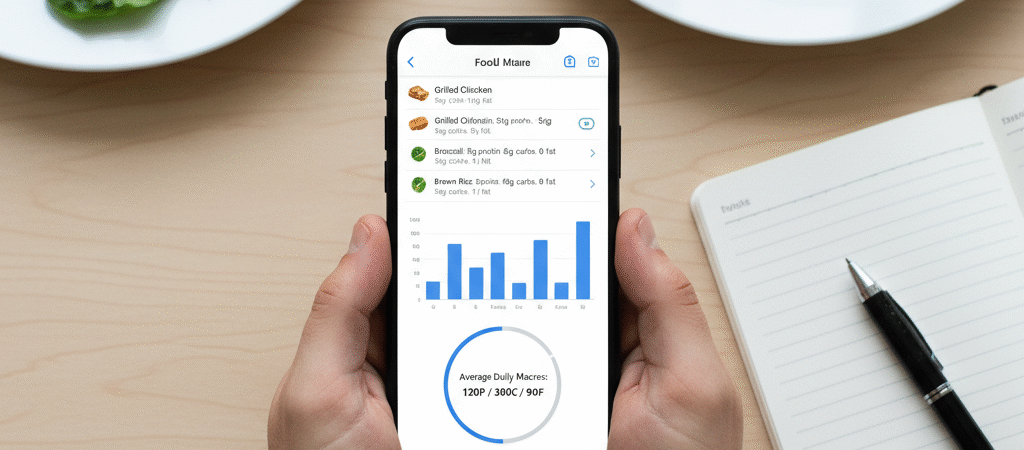
You’re ready to lose fat.
You’ve decided it’s time, and you’re motivated to start now. You’ve heard about low-carb, or keto, or maybe you’re just planning to “eat clean” and cut your calories. You’re ready for the hard work.
But this feeling is familiar, isn’t it? You jump into a restrictive new plan you found online. The first week is a brutal combination of hunger, confusion, and tracking foods you’re not used to. You’re fighting two battles at once: learning a new way of eating and learning the new habit of tracking. It’s overwhelming, and that initial motivation fades fast. It feels like you’re set up to fail before you even begin.
What if the real first step to a successful, sustainable fat loss diet wasn’t changing a single thing you eat? What if the secret was a simple, one-to-two-week process of data collection? This article outlines the foundational step that separates long-term success from another frustrating attempt. It’s the step most people skip, and it’s the very reason their plans fail.
Why “Just Eating Less” Is a Flawed Strategy
In the rush to see results, the most common mistake is to immediately adopt a cookie-cutter plan or arbitrarily slash calories. This is the equivalent of trying to plan a cross-country road trip without knowing your starting city. You might head in the general direction, but you have no way to make intelligent adjustments, and you’ll almost certainly get lost.
Here’s the deal: A fat loss plan’s success is determined by its starting conditions.
In our experience, clients who jump into a diet without a proper baseline are far more likely to quit. Why?
- They often cut calories too aggressively, leading to energy crashes, poor sleep, and extreme hunger.
- They have no data to compare against, so they can’t tell if their new plan is actually a change from their old habits.
- They “guess” at their intake, which is notoriously inaccurate.
To build a plan that is effective, smooth, and most likely to be successful, you must know where you are starting from.
Step 1: Become a Data Scientist (Of Your Own Diet)
Your first and only task for the next one to two weeks is to standardize and track your daily intake.
That’s it. No changes. No restrictions. No new “health” foods.
Your Only Job: Track, Don’t Change
This is the most important rule. For the next 7 to 14 days, you will eat exactly as you normally do.
- If you usually have pizza on Friday, eat the pizza and track it.
- If you have a sugary cereal for breakfast, eat it and track it.
- If you eat “healthy” all day, track that.
We are not judging the food; we are gathering data. The goal is to get a realistic weekly or two-week average of your typical consumption. This average is your maintenance baseline. It is the foundation upon which your entire fat loss diet will be built.
What Exactly Should I Track?
The numbers we’re most interested in are your macronutrients (or “macros”):
- Protein
- Carbohydrates
- Fats
These three macros make up the total calories you consume. Tracking macros is superior to tracking only calories because it tells us what kind of fuel you’re giving your body. This becomes critical later when we want to lose fat while preserving muscle.
A Note on Your Health (YMYL): This article is for informational purposes only and does not constitute medical advice. Before making any significant changes to your diet or starting a new fitness program, please consult with a qualified healthcare professional or a registered dietitian to ensure it is appropriate for your individual needs.
How to Track Your Intake (The Practical Guide)
You need a simple, reliable way to log your food. You have two main options.
1. The Modern Method: Tracking Apps
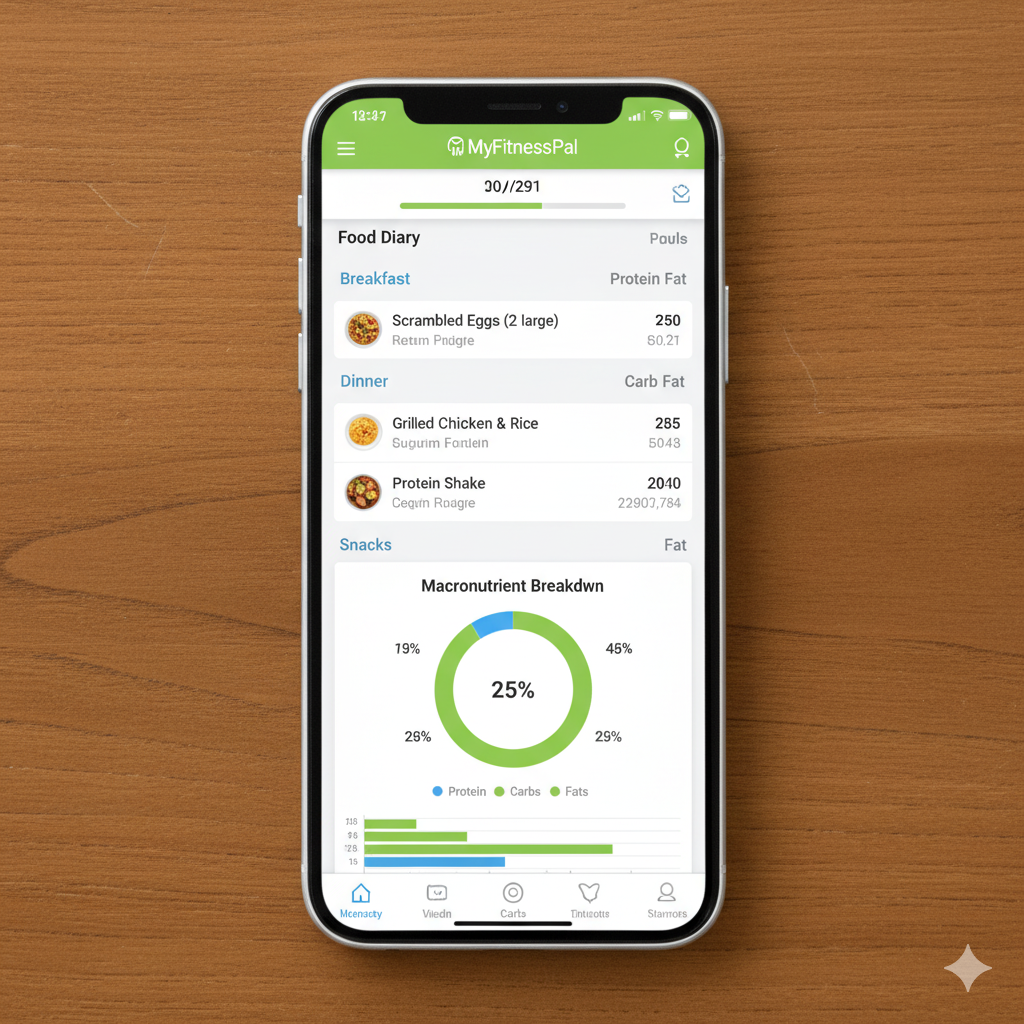
For most people, this is the easiest route. Apps like MyFitnessPal have massive food databases where you can scan barcodes or search for almost any food imaginable.
- Pros: It’s fast, convenient, and does all the math for you.
- Cons: The databases include user-generated entries, which can be inaccurate.
- Pro Tip: Whenever possible, use “Verified” entries (often marked with a green check) or double-check the app’s numbers against the nutrition label on the package.
2. The “Old School” Method: A Simple Notebook
This is as basic as it gets. You can use a physical notebook or a simple notes app on your phone (as Dr. Mike Israetel mentions in the video).
- Pros: It forces you to read labels and learn the macro content of your food, which is an invaluable skill.
- Cons: It’s 100% manual. You will have to do the math yourself, and it’s easier to make errors.
What If I Don’t Know What a “Macro” Is?
That’s perfectly fine, and you’re not alone. “Macros” is just shorthand for macronutrients.
- Protein builds and repairs tissue (like muscle).
- Carbohydrates are your body’s primary energy source.
- Fats are essential for hormone production and nutrient absorption.
If this concept is new to you, that’s where you should start. Before you can effectively track your intake, you need to understand the basics.
The Two-Fold Benefit of This “Pre-Diet” Phase
This 1-2 week tracking period does two critical things.
Benefit 1: It Builds Your Personalized Blueprint
Once you have your 1-2 week average, you have your data.
Let’s say you discover you’ve been eating, on average:
- 120g Protein
- 300g Carbs
- 90g Fat
- (Total: 2,490 Calories)
This is your maintenance foundation. Now, instead of guessing, we can make intelligent, small adjustments. We can strategically reduce carbs and/or fats by a small amount to create a slight calorie deficit.
This data-driven approach allows us to create a plan that is designed for fat loss, not just weight loss. We can ensure your protein remains high to protect your muscle, your energy levels stay as high as possible, and your sleep isn’t disrupted.
Benefit 2: It Reduces Your “Cognitive Bandwidth”
Think about it. Starting a new fat loss diet is hard. Learning to track every single thing you eat is also hard.
Doing both at the same time is a recipe for burnout.
Dr. Israetel calls this “cognitive bandwidth.” You only have so much mental energy to dedicate to new habits. By separating the tasks, you make success infinitely more likely.
- Phase 1 (Now): You learn the habit of tracking, which can be stressful at first. But the pressure is low because you’re still eating your normal, comfortable foods.
- Phase 2 (Later): Once tracking is second nature, you make one small change: adjusting your food quantities.
This “one change at a time” approach is the secret to building habits that last.
What to Expect and What Comes Next
This process of standardizing your intake is Step One. It is the single most important part of building a serious fat loss diet.
After your 7-14 days of tracking, you will have your average daily macros. This number is your key.
The next step is to begin intelligently adjusting that number. But this involves more than just eating less—it involves eating better. We will need to start choosing foods that are more conducive to fat loss (for example, foods that are more filling and nutrient-dense).